
5 Things People Get Wrong About CPR
As around, most people have a rough idea of what CPR looks like, mostly from television and movies. Someone presses on a chest a few times, breathes into a mouth, and the person gasps back to life. That picture, along with a handful of other assumptions, could be doing real harm than good because it keeps ordinary people hesitating in the exact moment when hesitation costs the most. So, we are breaking down the five most important things that people get wrong about Cardiopulmonary Resuscitation (CPR).
You need training before you can help
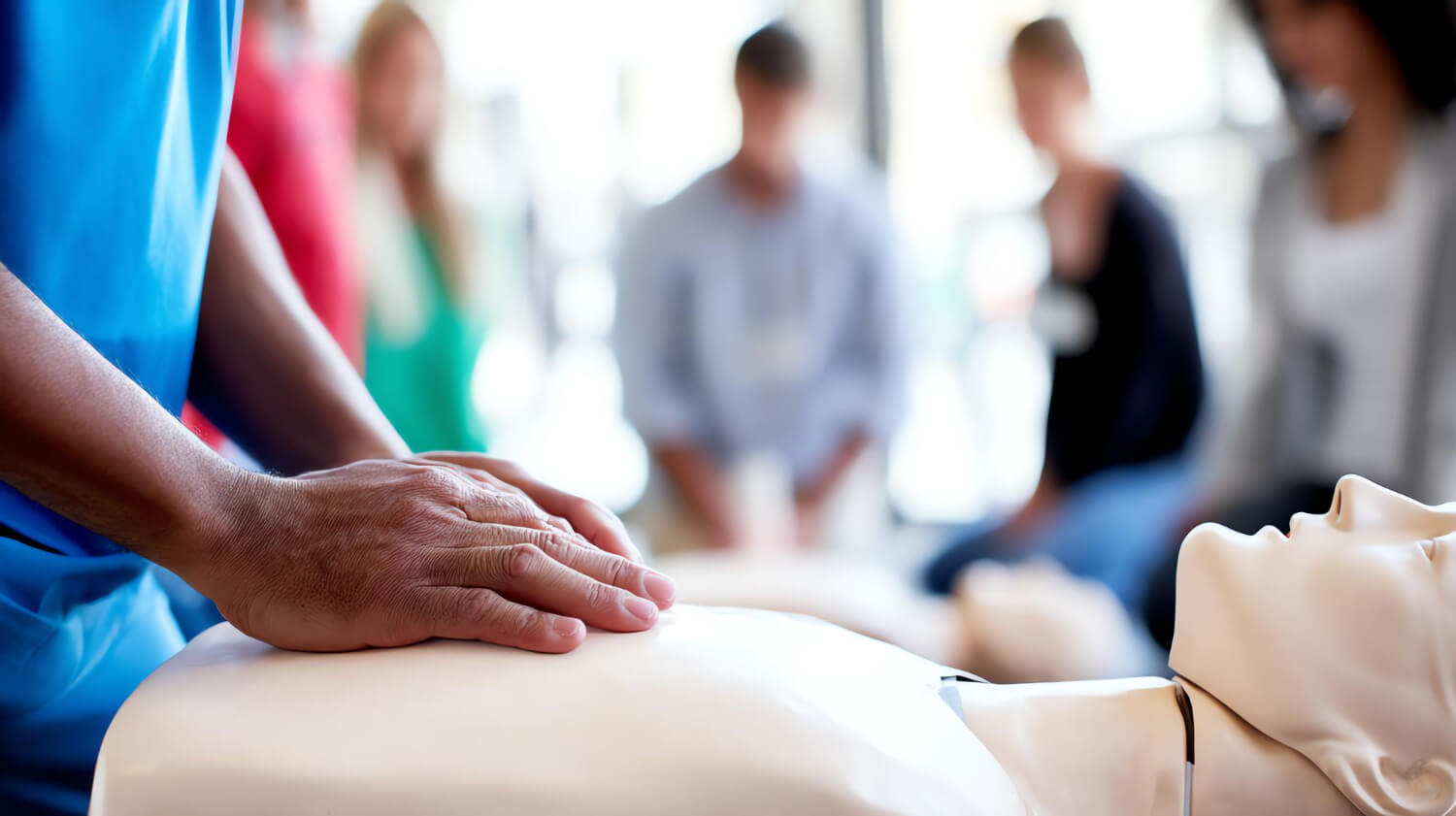
Many people believe CPR is something only paramedics or certified first aiders should attempt, so they freeze rather than risk doing it wrong. In reality, hands only CPR requires no certificate and no prior course. Push hard and fast in the centre of the chest and keep going. Emergency call handlers can talk you through it over the phone if you are unsure, and any attempt at all gives someone a far better chance than waiting for someone more qualified to arrive.
You have to do mouth to mouth for it to count
The fear of rescue breaths, whether from hygiene concerns or simply not knowing the technique, stops a lot of people from acting at all. For adults in cardiac arrest, hands only CPR has been shown to work just as well as CPR with rescue breaths in those critical first minutes, since the blood already in the body still carries enough oxygen to matter if compressions start immediately. Skipping the breaths and focusing purely on compressions is not a lesser version of CPR. For most adult emergencies, it is the recommended one.
You could get sued for trying to help
This fear runs deep, and it is worth addressing honestly rather than glossing over it. South Africa does not have a dedicated Good Samaritan law the way some countries do. What our courts have consistently recognised, though, is that a person who steps in to help during an emergency is judged as a reasonable rescuer acting in the moment, not held to the standard of hindsight perfection. In practice, the real danger has never been the rare case of a bystander facing consequences for a good faith attempt to help. It is the far more common case of someone standing by and doing nothing while a life slips away.
Breaking a rib means you did something wrong
Hearing or feeling a crack during compressions can be alarming, and it leads some people to ease off out of fear they are causing harm. Effective CPR requires firm, deep compressions, and as a result, close to a third of patients end up with a broken rib or sternum. This is not a sign of a mistake. Doctors see it as evidence that compressions were deep enough to actually move blood through the body. A cracked rib heals. A brain deprived of oxygen for too long often does not. This is an unpopular opinion but rather get it wrong than not attempting it at all.
CPR brings someone back to life like it does on TV
On screen, CPR usually ends with the person coughing, sitting up and talking within seconds. In reality, CPR rarely restarts a heart on its own. What it does is keep oxygen rich blood moving to the brain and other vital organs, buying precious time until paramedics arrive or a defibrillator can shock the heart back into rhythm. That distinction matters, because it means CPR is not a single dramatic act that either works or fails. It is one link in a chain that includes calling for help immediately and getting a defibrillator in place as fast as possible.
Why the myths matter more than they seem
Every minute that passes without CPR after a cardiac arrest lowers the chances of survival. The gap between someone living and someone not living often comes down to whether a bystander nearby was willing to act, not whether that bystander was perfectly trained. Letting go of these myths is not just useful information. It is the difference between freezing and helping when it actually counts.
Knowing what to do is only half the equation, getting help there fast is the other half. Having the iER App ready on your phone means you can alert emergency responders the moment something goes wrong, while you keep those compressions going until they arrive.