
Why Every Family Should Have the iER App
Most families spend a lot of energy trying to keep each other safe, checking in after school, sharing locations on long drives or when they go out, agreeing on what to do if something goes wrong. What often gets overlooked is the part that matters most in a real emergency, which is how quickly you can actually get help once something has already happened. In South Africa, that gap can be wider than most people realise. At the time the iER app launched, the country had roughly one advanced life support paramedic for every 17 825 people, compared to one for every 1 358 people in the United States of America. When every second counts, that difference is exactly the problem iER was built to solve.
What happens when someone presses the button
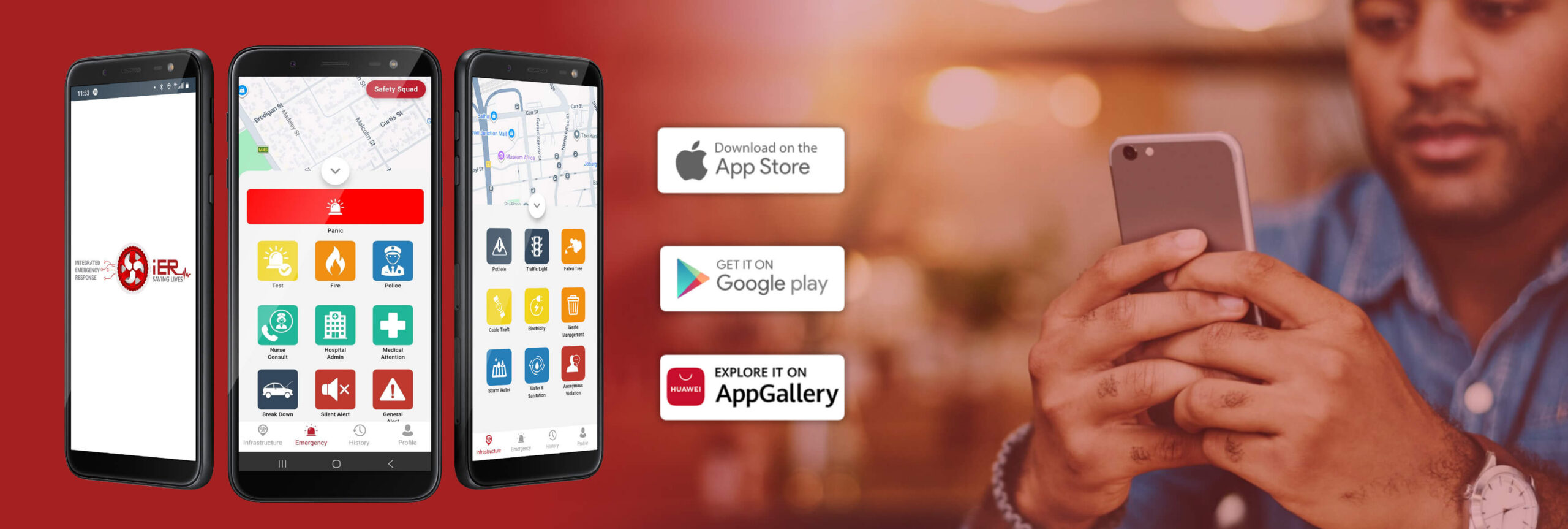
The idea behind iER is simple, when a family member presses the alert button on the app, it immediately notifies a trained call centre agent, pinpoints their exact GPS location and sends a distress signal to the people you have chosen as your support group. A trained agent calls back within a minute, the correct type of emergency unit gets dispatched straight to that location, and everyone in your personal network is notified so they know what is happening and where. None of this depends on remembering a number to dial or trying to explain an address while panicking. The app already knows.
The app built around the whole family
Every family member can load their own medical details into the app beforehand, things like blood type, medical aid information and next of kin, so responders have what they need the moment they arrive, even if the person in distress cannot explain it themselves. You can also build a private group for your household that has no limit on numbers, which means parents, children, grandparents, domestic workers and anyone else who spends time in your home can all be part of the same safety net. If one person hits their alert, everyone in that group knows immediately, which matters enormously when a teenager is walking home alone or an elderly parent is in the house by themselves.
More than one kind of emergency, because families face more than one kind
Not every crisis looks the same, and the app reflects that. There are separate options for different situations, from a medical emergency, a car breakdown to a hijacking or a fire, so the right kind of help gets sent rather than a generic response. The app has also grown to cover situations that do not always feel like traditional emergencies but still deserve a fast, safe way to ask for help, including a feature built specifically for reporting bullying. For families with children and teenagers, having a discreet way to flag something happening at school, long before it becomes a bigger crisis, is worth having on its own.
Peace of mind that does not cost anything
The app is completely free to download and use, which matters when the whole point is making sure cost is never the reason a family hesitates to reach out for help. Setting it up takes a few minutes, loading medical details and building your family group, and after that it simply sits quietly on your phone until the day you actually need it. Most families never want to think about that day. Having the iER App on your phone means you do not have to figure everything out in the moment it arrives.
Keeping your family safe was never really about avoiding every risk life throws your way. It is about making sure that when something does go wrong, help finds you as quickly as possible. That is the entire reason iER exists, and it is why so many South African families already have it sitting on their home screen.